

Mortgage Options for Buying a Second Home in Canada
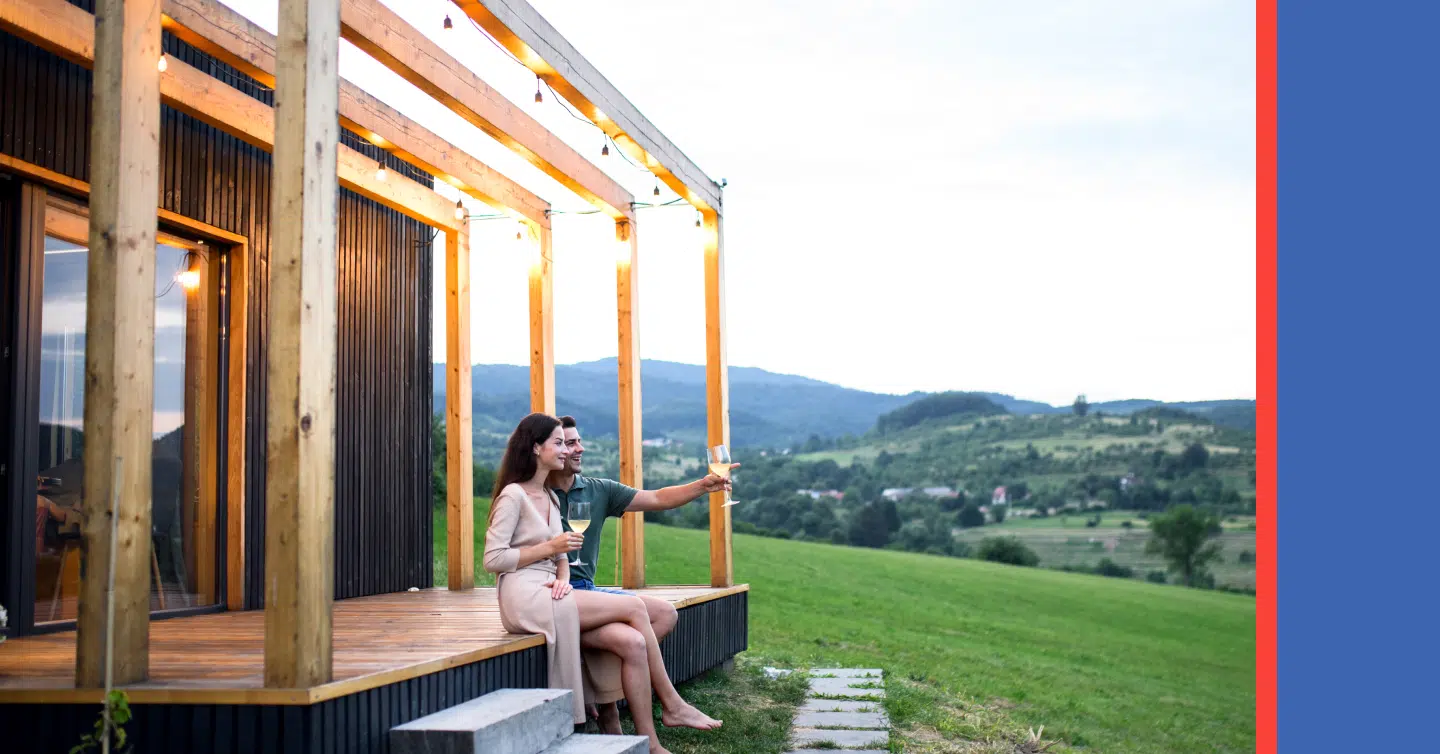
Many Canadians dream of owning a second home beyond their primary residence. Whether it’s a cozy cottage on the lake, a condo in the heart of a bustling city, or an investment property to generate income, you’ll likely need to explore mortgage options for buying a second home.
A second home can be classified as an owner-occupied property or an investment property. That distinction affects everything from minimum down payment to interest rates and approval criteria to capital gains taxes on future sale. Understanding how to secure a mortgage on your second home is your first step toward making your dreams a reality.
Key Takeaways
- A secondary home mortgage finances a property other than your primary residence.
- Down payment requirements depend on the property type and its intended use.
- Second homes do not qualify for the principal residence exemption and may trigger capital gains tax upon sale.
Best Mortgage Rates
What Is a Second Home Mortgage?
A second home mortgage is a loan used to finance the purchase of a property other than your primary residence. This can include vacation homes, secondary residences, and seasonal properties. Unlike income or investment properties, a second home is intended to be owner-occupied, meaning you or your family occupies the home rent-free for at least some of the year.
Obtaining a mortgage on a second home follows the same qualifying rules as your primary residence, as long as you intend to occupy the home. If you have no plans to occupy the second home, it will be considered an investment property. While income and investment properties can be considered a second home if you own the property alongside your primary residence, they are typically subject to stricter lending criteria than a mortgage for a second home you intend to occupy.
Reasons for Buying a Second Home
There are many reasons why you might be considering a second home.
- A vacation home
- A home if you work in a different city than your primary residence
- For your child to live while attending college or university
- For extended family members like aging parents
- As a future retirement home
- As an investment property
Mortgage Options for Buying a Second Home in Canada
Lenders assess second home mortgages more carefully than primary residences because carrying two properties increases financial risk. The mortgage structure you qualify for depends on how the property will be used, how much equity or cash you have available, and how lenders classify the home.
Insured Mortgage (5% to 19.99% Down)
If the second home is intended for personal use and will be occupied by you or an immediate family member, it may qualify for mortgage default insurance. Mortgage insurance premiums may be added to the total loan amount, increasing the overall cost of borrowing. Minimum down payment requirements follow federal guidelines:
• 5% on the first $500,000
• 10% on the portion above $500,000
Note: Insured down payment requirements may vary between default insurers
Which Mortgage Insurers Cover Second Homes in Canada?
For eligible second homes with less than 20% down, mortgage default insurance may be available through Canada Mortgage and Housing Corporation (CMHC) or private insurers Sagen and Canada Guaranty, subject to their underwriting guidelines. The property typically needs to be accessible year-round, have full services, and meet standard residential lending requirements.
Uninsured Mortgage (20% Down or More)
When the borrower puts down at least 20%, the mortgage is considered uninsured. This removes the need for mortgage default insurance and eliminates the insurance premium that would otherwise be paid up front or added to the loan balance.
If the second property is intended to generate rental income, it will be classified as an investment property. Investment properties require a minimum down payment of 20% and are not eligible for default insurance.
Uninsured second home financing is often used when one or more of these are true:
• The purchase price is $1.5 million or higher
• The property will be used as a rental
• The buyer wants to avoid default insurance premiums
Types of Homes That Qualify for a Second Home Mortgage
The type of home and its intended use will determine the mortgage qualifying rules for second homes. Second homes can fall into the following categories:
Vacation Home
Vacation homes are typically used for recreational purposes, like weekend getaways or extended vacations, and are not occupied full-time. These properties are winterized or can be used year-round and classified as Type A secondary homes with lenders.
Requirements: To be considered a Type A vacation home, it must have full year-round access and be fully winterized. It can be zoned residential, rural, or seasonal. It must also have a permanent heat source, such as forced air or baseboard, and the water must be drinkable. The water source must be a well, municipal service, or cistern. Lake water intake may be acceptable to the lender, provided the property has its own filtration system. There must also be a kitchen and a 3-piece bathroom. Additionally, the property must have a permanent foundation.
Second Residences
Second residences are homes used as a primary residence for part of the year, such as a home used during the workweek. These properties can be homes, townhomes, or condos purchased to accommodate work-related relocations or reduce commutes while maintaining a primary residence elsewhere. They may also be purchased for a child to live in while attending college or university, or for family members to live in.
Requirements: Second residences will follow the same criteria as primary residences. If the home is purchased for your child to live in, they must live in the home rent-free. If the home is purchased for a family member, that family member must also live in the home rent-free and be considered a next of kin. Lenders may impose restrictions on the distance from your primary residence.
Seasonal Properties
Some vacation homes are designated for seasonal use, meaning they are not winterized or cannot be accessed or lived in year-round. These types of second properties are classified as Type B with lenders.
Requirements: Type B properties follow many of the same requirements as Type A properties, with a few exceptions. They do not require a permanent heat source but must have a potable water source. The foundation can be floating (sitting on blocks), and the property can be accessible only by boat. Type B properties should not be confused with mobile homes, which require a chattel mortgage and may not require title to the land where they sit.
Investment Properties
If your second property is purchased to generate income, it will be classified as an investment property. These properties range from single-family homes to townhomes and condos purchased for rental use and rented to family or non-family tenants.
Requirements: Investment properties are treated as non-owner-occupied homes and follow different underwriting rules than vacation or secondary residences. Lenders will assess the property’s marketability and review projected rental income to determine mortgage qualification. The property must meet standard residential lending criteria, including a permanent foundation, a full kitchen, and 3-piece bathroom facilities. Additional restrictions may apply depending on the number of rental units, property type, and location.
Want to save thousands of
dollars on your renewal?
Renew with nesto and you can.
Mortgage and Down Payment Rules for Buying a Second Home
When securing a mortgage for a second home, lenders look closely at how the property is classified. This classification determines the minimum down payment you will be required to put down, eligibility for default insurance, and even the interest rates you may be offered.
Year-Round Vacation Properties and Second Homes
Year-round vacation (“Type A”) and second homes will follow the same lending criteria and can be financed similarly to your primary residence. Insured mortgages will require a minimum 5% down payment, depending on the purchase price, and uninsured mortgages will require a minimum 20% down payment. All federally regulated lenders must also apply the mortgage stress test, requiring borrowers to qualify at the greater of 5.25% or the contract rate plus 2%.
You will be required to show sufficient income through acceptable debt service ratios to cover all debts, including the carrying costs of your primary residence. Depending on the lender, interest rates may be slightly higher for second homes, as there is a higher risk of default since borrowers are more likely to maintain payments on their primary residence than on a second home when facing financial difficulties.
Seasonal Properties
Seasonal properties (“Type B”) or properties that cannot be used or accessed year-round will have much the same qualifying criteria as Type A properties, with a few exceptions. For this type of second property, you will require a minimum down payment of 10%.
Interest rates may be higher due to the potential risk that Type B seasonal properties may be more challenging to sell or maintain value. Depending on the lender or default insurer, this type of property may have a maximum loan amount of $350,000, requiring you to make up any purchase price difference with your down payment.
Investment Properties
Investment properties or those used to generate income require a minimum 20% down payment. Investment properties typically have higher interest rates. To qualify, some lenders will consider 50% of the reported rent to determine whether the property is cash flow positive. With or without consideration of rental income, your total debt service (TDS) ratio must meet the lender’s guidelines.
Using Equity From Your Primary Residence
Many homeowners purchase a second home without using savings by leveraging equity from their existing property. This approach can significantly reduce the need for a cash down payment. Federally regulated lenders, overseen by the Office of the Superintendent of Financial Institutions, limit refinances to a maximum loan-to-value (LTV) ratio of 80%. This means at least 20% equity must remain in the primary residence after refinancing.
Homeowners can finance a second property by accessing equity through:
• Cash-out refinance
• Home Equity Line of Credit (HELOC)
• Second Mortgage
Second Home Mortgage vs Second Mortgage
It’s important to distinguish between a mortgage for a second home and a second mortgage. A second home mortgage is a loan used to finance the purchase of an additional property. A second mortgage is a loan secured against the equity in a property that already has a mortgage.
Understanding Second Home Mortgages
A second home mortgage is typically used to finance the purchase of a second residence or vacation home intended for personal use. However, it can also apply to investment properties. This mortgage is separate from the one on your primary residence or any other properties you may own and covers an entirely different property.
Understanding Second Mortgages
A second mortgage is a loan taken out on a property that already has a mortgage. It is often used to tap into the home’s equity and is second in its registered position on your property’s land title behind your first mortgage. Second mortgages can fund home improvements, consolidate debts, or pay for other expenses.
Second mortgages are placed on property with a mortgage, putting them “second” to the primary or first mortgage. In the event of foreclosure, these mortgages would be paid after the first mortgage. Their second position against the title increases the lender’s risk, requiring a higher interest rate to offset the higher default risk.
Tax Implications of Owning a Second Home in Canada
Financing rules are only one part of the equation. Owning a second home in Canada also carries important tax implications that differ from owning a primary residence. How the property is used, whether it generates income, and how long it is held will all affect the tax treatment. If the second home is used to generate income, you will need to report any rental income on your tax return for the year. However, you can claim certain expenses with rental properties that can offset some of the income generated.
Capital Gains Tax on Sale
Unlike a principal residence, a second home does not qualify for the principal residence exemption. When the property is sold, any increase in value may be subject to capital gains tax. This means 50% of the capital gain must be included in taxable income in the year of sale. That taxable portion is then added to the owner’s income and taxed at their marginal tax rate.
For example, if a cottage increases in value by $200,000, $100,000 would be included in taxable income. The actual tax payable depends on the owner’s income tax bracket in the year of sale, and the taxpayer’s province of residence as of December 31st in the tax year.
If a property was used partly as a principal residence and partly as a rental, the calculation becomes more complex. Owners can only designate one property per year as their principal residence under Canada Revenue Agency (CRA) rules.
Frequently Asked Questions (FAQ) About Mortgages for Second Homes in Canada
Can you use home equity to buy a second property in Canada?
Homeowners with enough equity can refinance up to 80% of their primary residence’s value and use the proceeds as a down payment for a second property.
What is the minimum down payment for a second home in Canada?
The down payment you will need for a second home depends on the type of property you purchase. If the property is a year-round vacation home or second residence, you will need a minimum down payment of 5%. Seasonal properties that cannot be accessed year-round require a minimum down payment of 10%. Investment properties will require a minimum down payment of 20%.
Are mortgage rates higher for second homes in Canada?
Mortgage interest rates may be slightly higher, particularly for investment properties, due to increased default risk.
Does the mortgage stress test apply to second homes?
Yes, all federally regulated lenders must apply the stress test to second property purchases.
Final Thoughts
Purchasing a second home can be a great investment opportunity that helps you create long-lasting memories, reduce your commute, provide stable housing for your children or family members, or generate income. Whether for leisure, family needs, or investment purposes, understanding the types of properties typical of second home purchases can help you successfully budget and navigate the different mortgage requirements necessary to purchase your next property.
Consult our experienced nesto mortgage experts to see if a second home fits your goals and finances.
Why Choose nesto
At nesto, our commission-free mortgage experts, certified in multiple provinces, provide exceptional advice and service that exceeds industry standards. Our mortgage experts are salaried employees who provide impartial guidance on mortgage options tailored to your needs and are evaluated based on client satisfaction and the quality of their advice. nesto aims to transform the mortgage industry by providing honest advice and competitive rates through a 100% digital, transparent, and seamless process.
nesto is on a mission to offer a positive, empowering and transparent property financing experience – simplified from start to finish.
Contact our licensed and knowledgeable mortgage experts to find your best mortgage rate in Canada.
Let’s get started!
About the contributors